
3PL warehouse operations: what “pick, pack, ship” really means
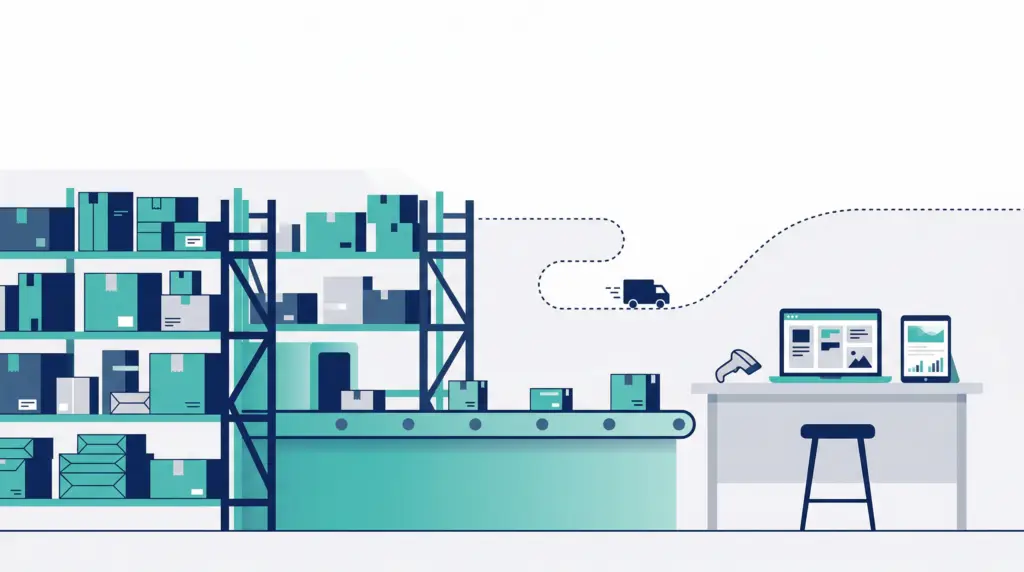
In a high performing 3PL warehouse, pick, pack, and ship is not three steps. It is one connected workflow that starts with clean inventory data and ends with a verified carton leaving on the right carrier, at the right cutoff. When these steps are loosely connected, errors creep in: wrong items, shorts, duplicate shipments, missed SLAs, and costly returns.
This guide breaks down a practical pick, pack, and ship workflow used in modern third party logistics operations. You will also see where technology, layout, and training choices reduce errors without slowing your team down.
Why pick and pack errors happen in a 3PL warehouse
Most fulfillment mistakes are not caused by a single “bad pick.” They usually come from small gaps that stack up across the day:
- Inventory record issues that send pickers to empty or wrong bins
- Unclear item data like confusing SKU naming or missing barcodes
- Manual verification where staff rely on memory or visual matching
- Congestion and travel time caused by poor slotting and inconsistent pick paths
- Exceptions handled inconsistently like substitutions, damage, and backorders
A reliable workflow does not depend on hero employees. It depends on process design that makes the correct action the easiest action.
A practical pick, pack, and ship workflow for a 3PL warehouse
Below is a workflow you can adapt whether you are running Shopify, Amazon, or omnichannel fulfillment through a 3PL partner. The details vary by WMS, but the control points are the same.
1) Order intake: release work in a predictable rhythm
The workflow starts in the order management layer. The goal is to release work in a way that supports carrier cutoffs, labor planning, and packing capacity.
- Hold and exception rules: automatically flag address issues, fraud holds, and inventory conflicts before orders reach the floor.
- Batching logic: group orders by carrier cutoff, shipping method, or product family so the warehouse can pick efficiently.
- Priority lanes: separate simple fast lane orders from complex orders (multi line, fragile, kitted, hazmat).
If you release work randomly, the warehouse spends the day context switching. If you release work in waves aligned to cutoffs, you get a smoother flow and fewer last minute errors.
2) Inventory slotting: reduce walking and reduce confusion
Pick speed and accuracy both improve when locations are logical. A simple slotting approach that works for many 3PL operations:
- Fast movers near pack stations: keep the highest velocity SKUs close to the work.
- Common bundles nearby: place items that ship together near each other.
- Separate look alike SKUs: do not place similar packaging next to each other if it causes confusion.
- Define pick paths: assign a direction for aisles and a consistent pick sequence.
Peoplevox highlights that routing and layout decisions materially affect order picking efficiency, and recommends clear pick paths plus slotting based on demand rather than convenience (Peoplevox).
3) Picking: use scanning as a forcing function
Picking is where most errors are introduced, so it is also where the best operators add the strongest controls. The most common “high accuracy” pattern is scan enforcement: scan location, then scan item.
Peoplevox recommends barcode scanning for every pick and every exception, plus a scan at pick and a scan at pack to reduce mis-ships, especially for similar SKUs (Peoplevox).
Choosing the right pick method
There is no single best pick method. A good 3PL warehouse selects the method that fits volume, layout, and order profile:
- Single order picking: better for low volume, high touch orders.
- Batch picking: pick multiple orders at once, then sort at pack or at a consolidation area.
- Zone picking: staff stay within defined zones while orders move across zones.
- Wave picking: release work in timed waves tied to carrier cutoffs.
Peoplevox notes that batch, wave, and zone picking can improve efficiency when matched to order volume and layout (Peoplevox).
3PL warehouse picking checklist
- Every sellable unit has a scannable barcode that maps to the correct SKU
- Location labels are scannable and consistent across zones
- Pick confirmation is scan based, not visual
- Exceptions are routed to a separate process, not “fixed on the fly”
4) Replenishment: prevent empty bins and last minute substitutions
Replenishment is an accuracy lever. When pick faces run empty, the floor starts improvising. That is when substitutions, shorts, and mislabeled cartons spike.
To keep flow clean:
- Min and max rules: set minimum quantities for fast movers and replenish before the bin hits zero.
- Separate overstock: keep reserve storage clearly labeled, with clean pallet IDs or case IDs.
- Cycle counts built into the day: count high value or high velocity locations regularly to keep inventory records aligned.
Peoplevox specifically calls out “smart replenishment” as a way to reduce touches and avoid pick delays (Peoplevox).
5) Packing: verify contents before you print the label
In many warehouses, the label gets printed first, then the team tries to match items to the label. That sequence can be risky in high volume environments.
A safer sequence is:
- Scan the tote or order ID to pull up the pack screen.
- Scan each item as it is packed to confirm SKU and quantity.
- Confirm packaging type (poly mailer, carton size) and add dunnage rules.
- Weigh the carton (if required) and compare to expected weight ranges.
- Then print the carrier label and apply it immediately.
Scan based packing is also a natural place for targeted QA. If one SKU drives a disproportionate share of returns, add a second scan or a quick supervisor check only for that item, not for every order.
6) Shipping: align cutoffs, manifests, and pickup handoff
The “ship” step is where small delays can turn into missed carrier cutoffs. A well run 3PL warehouse makes shipping predictable by building a repeatable end of day routine:
- Carrier staging zones: dedicate floor space by carrier and service level.
- Scan to close: scan cartons into the correct carrier container or pallet to reduce misroutes.
- Manifest timing: close manifests with enough buffer for labeling and last mile handoff.
- Exception cage: keep problem shipments separate so they do not contaminate staged freight.
If shipping accuracy is a key concern for your brand, Anata can help you evaluate fulfillment processes and carrier strategies through our shipping services.
Where barcodes and standards improve 3PL warehouse accuracy
Barcode scanning works best when your item identification is consistent across systems and partners. GS1 guidance notes that adding data beyond a GTIN in a barcode can enable automation and validation throughout the supply chain (GS1). For a 3PL warehouse, that translates into a few practical wins:
- Cleaner receiving: fewer misreceipts when inbound labels map to known identifiers.
- Better traceability: batch, lot, or serial data supports recalls and expiry management.
- Fewer manual touchpoints: scanning reduces rekeying and mismatched SKU interpretation.
Even if you are not implementing advanced 2D barcodes tomorrow, a consistent barcode strategy is one of the fastest paths to fewer fulfillment errors.
KPIs to track in a 3PL warehouse pick pack ship workflow
To reduce errors and increase throughput, track a small set of KPIs with clear definitions. Start with weekly reporting and then refine as your process stabilizes.
- Pick accuracy: correct lines picked divided by total lines picked.
- Order accuracy: orders shipped without errors divided by total orders shipped.
- On time ship rate: orders shipped before cutoff divided by total orders due to ship.
- Dock to stock time: time from receiving to available inventory in the system.
- Units per labor hour: a throughput lens that helps you model capacity.
- Exception rate: share of orders routed to problem solving (address, damage, stock, special handling).
Peoplevox suggests starting with metrics like pick rate and pick accuracy and coaching teams to them (Peoplevox).
How to evaluate a 3PL warehouse before you outsource
If you are choosing a new 3PL partner or auditing your current one, ask questions that reveal process discipline, not just pricing:
- Do you require scan verification at pick and at pack?
- How do you handle look alike SKUs and kitting?
- What is your process for replenishment and cycle counts?
- How do you stage outbound shipments by carrier and cutoff?
- What KPIs do you report weekly, and how are they defined?
- How do you train new associates so you are not relying on tribal knowledge?
Strong answers sound specific. If the response is mostly about “our team is careful,” expect performance to drift as volume grows.
Make your fulfillment workflow faster, with fewer mistakes
A tight pick, pack, and ship workflow is one of the highest ROI improvements you can make in a 3PL warehouse. The theme is simple: reduce decision making, enforce scanning, and build repeatable routines that scale during peak season.
If you want an outside set of eyes on your fulfillment process, Anata can help you identify quick wins and longer term fixes. Request a free marketing analysis or reach out through our contact page to talk through your shipping and fulfillment goals.