

Amazon Brand Loyalty in 2026: A Practical Playbook for Repeat Buyers (Without Leaving Amazon)
If your Amazon strategy still treats every order like a one time event, you are leaving profit on the table. Customer acquisition costs keep rising, and marketplace competition keeps tightening. The fastest way to stabilize growth is to build Amazon brand loyalty by turning first time buyers into repeat customers.
The good news is that Amazon now offers more first party levers for retention than most sellers realize. In 2026, the winning playbook is simple: earn followers, use Amazon customer analytics to find who is most likely to buy again, and deploy targeted incentives that nudge the next purchase at the right time.
This guide breaks down a practical, repeatable system you can run monthly, even if you have a small team.
Why Amazon brand loyalty matters more than ever
Retention is the most controllable growth lever in a mature marketplace. When you increase repeat purchase rate, you can spend more confidently on ads because the first conversion is no longer the only profit event. You also reduce your dependence on constant new keyword discovery.
More importantly, retention improves operational predictability. Repeat buyers drive steadier demand, which helps you plan inventory, reduce stockouts, and avoid cash flow surprises.
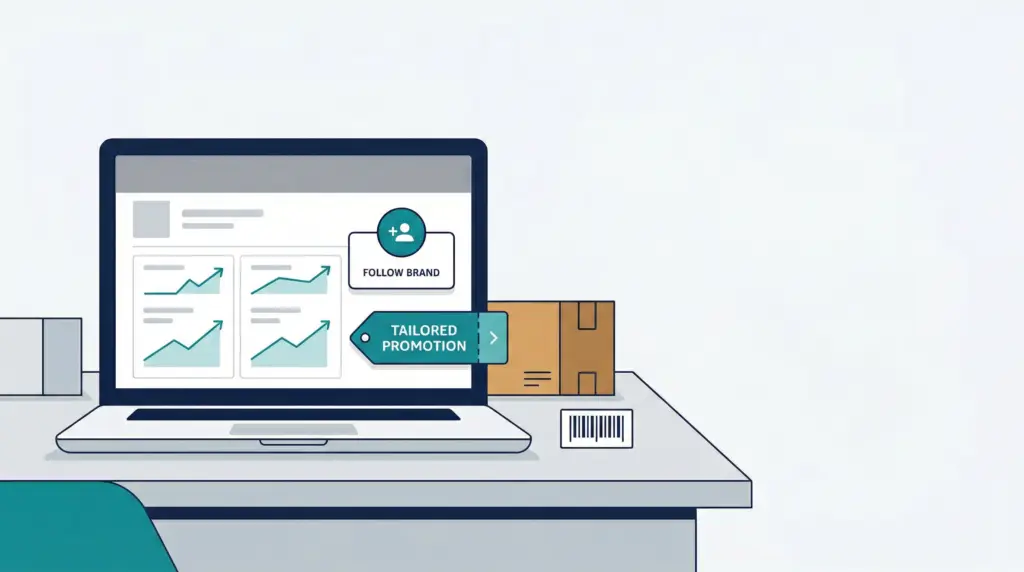
Start with the retention flywheel: Follow, analyze, then tailor offers
Think of loyalty on Amazon as a flywheel:
- Follow: Build an audience you can reach again inside Amazon.
- Analyze: Use Amazon customer analytics to identify your best repeat purchase opportunities.
- Tailor: Deliver the right incentive to the right shopper segment, at the right time.
Each step compounds the next. A bigger follower base creates a larger re marketing pool. Better analysis helps you avoid discounting shoppers who would have purchased anyway. Targeted offers improve ROI and reduce margin waste.
Step 1: Grow your follower base with Amazon Brand Store optimization
Your first retention asset on Amazon is your follower count. Amazon’s Brand Follow experience places a Follow button across Stores, Posts, and Amazon Live, which makes it easier for shoppers to subscribe to your brand updates. Amazon has reported more than 20 million follow relationships between shoppers and brands, which signals meaningful shopper adoption of the feature.
Where shoppers can follow you
- Brand Store: The core home for your brand story and product discovery.
- Amazon Posts: Shoppable content that can attract and convert browsers.
- Amazon Live: Livestreams that build trust and can drive spikes in engagement.
Amazon brand store optimization checklist for loyalty
Most Stores are built for discovery, but not for repeat buying. Use this checklist to redesign your Store so it actively supports amazon customer loyalty:
- Create a “Start Here” page that explains who the product is for, then routes shoppers into the right collection.
- Add a “Reorder” or “Refill” section for consumables or replenishable products.
- Use comparison modules so customers can quickly choose the right SKU without bouncing back to search.
- Feature bundles and complements to increase basket size and support cross sell.
- Keep creative consistent so returning shoppers recognize your brand instantly.
Goal: make your Store feel like a helpful product advisor, not a catalog.
Step 2: Use Amazon customer analytics to find your retention anchors
Next, you need to know which products and customer segments are worth investing in. Many brands assume the top seller is the best loyalty driver, but repeat buying often comes from a smaller set of “retention anchors.” These are products that create habit, replenishment, or a clear next step.
How to identify retention anchors
In Amazon Brand Analytics, look for products with strong repeat purchase behavior. When you find them, treat them differently than the rest of your catalog:
- Protect their rankings with consistent inventory and pricing discipline.
- Invest in premium creative to increase conversion without bigger discounts.
- Build bundles that connect them to other products in your line.
Segment customers by intent, not just by “new versus returning”
The simplest loyalty mistake is running blanket discounts. Instead, segment by intent. Here is a practical segmentation approach you can run without complicated tooling:
- High intent non buyers: shoppers who clicked or added to cart but did not purchase.
- First time buyers: customers who need onboarding and reassurance.
- Repeat purchasers: customers who need a reason to stay with you.
- At risk: customers who used to buy, but slowed down.
These segments map directly to Amazon’s newer targeting options for promotions.
Step 3: Use Brand Tailored Promotions to build amazon brand loyalty
Brand Tailored Promotions are one of the most practical tools for retention because they let you offer targeted discounts to specific shopper groups. Amazon explains that Brand Tailored Promotions allow Brand Registry sellers to create targeted offers for different audiences, including long term customers, new customers, and cart abandoners. The discount range is 10% to 50%, and the start date must be set at least 48 hours in the future.
Which audiences you can target
Amazon’s audience definitions make it easier to run promotions like a direct to consumer team, while staying inside the marketplace:
- New customer acquisition: shoppers who clicked or added to cart in the last 90 days but have not purchased.
- Customer retention: repeat purchasers and your highest spending customers from the last 12 months.
- Re engagement: lapsed customers and loyal customers declining in purchases.
- Cross sell: encourage existing customers to buy a complementary product.
How to choose the right discount without training shoppers to wait
Discounting is a tool, not a strategy. Use a simple decision rule:
- High intent non buyers: use a modest discount, focus on removing friction. If the product already has strong reviews and price parity, test 10% to 15% first.
- Repeat purchasers: keep discounts small, and focus on convenience. Consider a limited time offer tied to a reorder window.
- At risk customers: use a slightly stronger incentive, especially if competitors are aggressive in your category.
- Cross sell: discount the second item, not the hero item, so you protect margin on the SKU that already wins the first purchase.
Then validate with numbers. If a discount does not increase total contribution margin after ad spend, it is not a loyalty win.
A monthly operating cadence you can assign to one person
If you want loyalty to be reliable, it has to become routine. Here is a monthly cadence that works for SMB teams:
Week 1: Diagnose
- Export Amazon customer analytics and identify top retention anchors.
- List your top 3 customer segments to target this month.
- Pick 1 to 2 products to protect with inventory and pricing discipline.
Week 2: Improve conversion for retention anchors
- Refresh main image or secondary images if needed.
- Strengthen A plus content with FAQs and use cases.
- Update your Brand Store pages so returning customers can find the right SKU fast.
Week 3: Launch targeted promotions
- Schedule Brand Tailored Promotions at least 48 hours ahead.
- Use one clear goal per promotion: retention, re engagement, or cross sell.
- Limit overlap so you can interpret results cleanly.
Week 4: Review and lock in learnings
- Measure incremental sales and margin, not just unit volume.
- Compare results by audience type to see where discounts are actually necessary.
- Document what worked so next month’s plan is faster.
Common loyalty mistakes that quietly drain profit
Mistake 1: Treating loyalty like a single promotion
Loyalty is a system. If you only run promotions, you will create discount dependency. Pair offers with better Store experience, better creative, and faster fulfillment so customers have reasons to stay beyond price.
Mistake 2: Ignoring fulfillment speed and stockouts
Even the best loyalty plan fails if your product is out of stock or arrives late. If you want repeat buyers, protect your buy box, keep inventory healthy, and choose fulfillment and shipping operations that match your promised delivery window.
Mistake 3: Not building a cross sell path
If your catalog has multiple products, you need a designed path from the first purchase to the second. Use Store pages, bundles, and cross sell promotions so customers understand what comes next.
How Anata Inc. helps brands build Amazon customer loyalty
At Anata Inc., we help brands connect the full loop: Brand Store optimization, campaign planning, and operational execution so you can scale without chaos. If you want a clearer plan for increasing repeat purchases and improving amazon brand loyalty while protecting margin, we can help you prioritize the highest impact changes first.
Call to action: Get a free review of your Amazon growth and retention opportunities at https://anatainc.com/free-marketing-analysis/, or reach out directly via https://anatainc.com/contact/.